China’s Economy Grows 5% in 2025 on Export Strength, but Momentum Slows Toward Year-End
Author
NEPSE TRADING
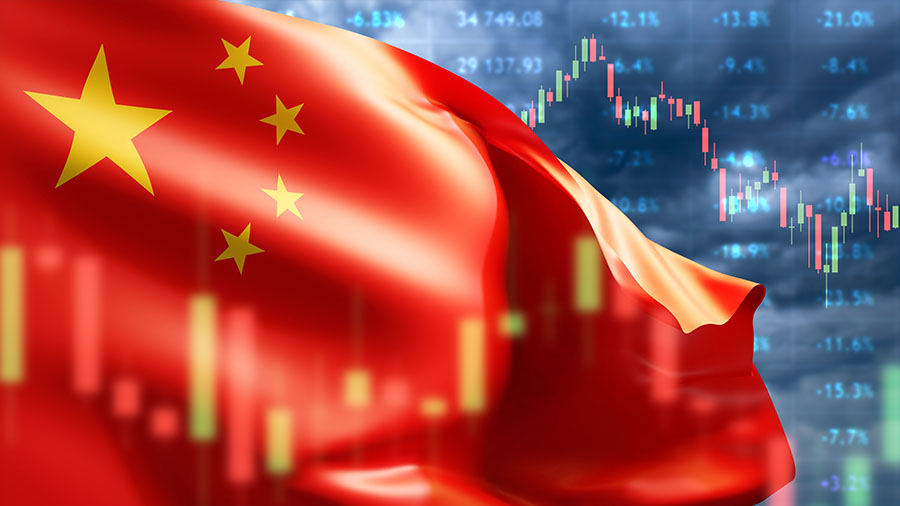
Despite pressure from import tariffs imposed by former U.S. President Donald Trump, China’s economy expanded by an annual 5 percent in 2025, supported largely by strong export performance, according to official government data. However, the pace of growth slowed noticeably in the final quarter of the year, highlighting underlying structural weaknesses in domestic demand.
Data released by the National Bureau of Statistics of China show that the economy grew by just 1.2 percent between October and December, marking the weakest quarterly performance since the end of 2022. This compares with a 4.8 percent expansion recorded in the third quarter. On an annual basis, overall growth aligned with the government’s target of “around 5 percent,” a figure Beijing has repeatedly emphasized as necessary for economic stability.
Exports once again emerged as the main pillar of growth, offsetting sluggish consumer spending and weak private investment. China posted a record trade surplus of nearly USD 1.2 trillion in 2025, underlining the scale of its external sector. However, exports to the United States fell by around 20 percent year-on-year, reflecting the lingering impact of tariffs and trade tensions. Chinese officials said increased shipments to other regions helped cushion the blow from declining U.S.-bound exports.
Trade pressures eased somewhat after China and the United States agreed to extend a temporary truce in their trade dispute following discussions between Trump and Chinese President Xi Jinping. While the pause has reduced immediate risks for exporters, analysts caution that uncertainty remains high as trade policy continues to be shaped by geopolitical considerations.
Economists have raised concerns over the sustainability of China’s export-driven growth model. Lin Song, Greater China chief economist at Dutch bank ING, warned that China could face sharper economic headwinds if more countries follow the U.S. in raising import tariffs. He noted that relying on external demand alone may expose the economy to sudden shocks beyond Beijing’s control.
On the domestic front, long-standing weakness in the real estate sector and lingering post-pandemic effects continue to weigh heavily on economic activity. Government measures aimed at boosting consumption, including subsidy programs for energy-efficient vehicle replacement and household appliances, have progressed more slowly than expected, limiting their overall impact on demand.
According to Chi Lo, senior strategist at BNP Paribas Asset Management, a meaningful recovery in consumption and private investment is unlikely until stability returns to the property market. He stressed that housing remains central to household wealth and confidence, and without a turnaround in this sector, broader domestic demand is likely to remain subdued.
Meanwhile, investment in artificial intelligence and advanced technologies has been elevated to a top priority by the Chinese Communist Party. However, analysts note that gains from high-tech investment have yet to translate into widespread job security and income growth. Ordinary citizens and small businesses continue to face uncertainty, raising questions about how inclusive China’s current growth model truly is.
National Bureau of Statistics head Kang Yi said China’s economy had maintained “steady progress” in 2025 despite multiple challenges. Nevertheless, several international analysts remain skeptical, suggesting that actual growth may be lower than official figures indicate due to weak internal demand and mounting debt pressures.
Looking ahead, economists argue that China must sustain annual growth of 4 to 5 percent over the long term to preserve social stability and employment. Reflecting these concerns, Deutsche Bank has projected that China’s economy will expand by only 4.5 percent in 2026, signaling a more challenging outlook as export momentum fades and domestic reforms become increasingly urgent.