Historic Agreement Between Nepal Government and Gen-Z Representatives: Major Reforms on Governance, Justice, Elections, and Constitutional Amendments
Author
NEPSE TRADING
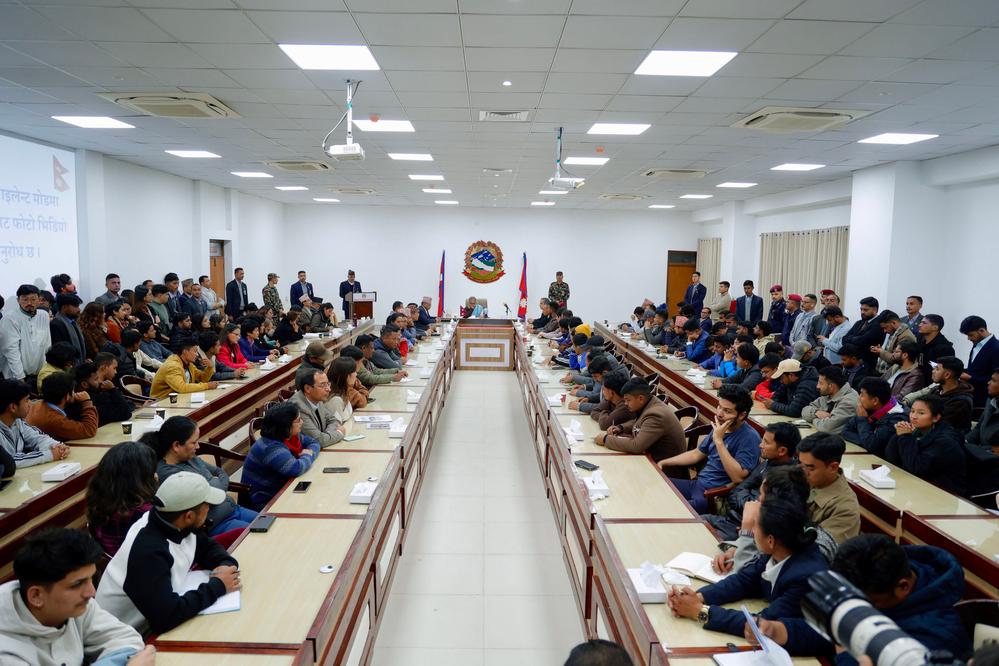
The Government of Nepal and representatives of the Gen-Z (GenJ) movement have reached a historic agreement addressing the key demands raised during the recent nationwide protests. The agreement, signed at the Office of the Prime Minister and Council of Ministers, formally recognizes the structural issues—corruption, misgovernance, impunity, discrimination, exclusion, and socio-economic inequality—that culminated in the mass uprising of Bhadra 23 and 24.
The preamble of the agreement acknowledges that the failure to address these systemic issues on time triggered political and social unrest, leading to widespread dissatisfaction among the youth. It also commits to independent investigations into human-rights violations during the protests and ensures truth, justice, reparations, and institutional reforms to end the culture of impunity.
The document also recognizes the rise of digital platforms as legitimate mediums of civic expression and validates the new cultural symbols and creative forms used during the Gen-Z movement.
🔹 Strong Commitments for Justice, Recognition, and Support to Victims
The agreement ensures that individuals who lost their lives during the protests will be formally declared martyrs.
A high-level task force will be formed to provide comprehensive support to victims and families, including:
Interim relief and compensation
Free medical and psychosocial care
Education and employment opportunities
Social security
Meaningful memorialization
The government has also committed to forming a permanent independent commission aimed at promoting good governance, preventing corruption, and ending impunity.
🔹 Investigation of Bhadra 23–24 Incidents & Institutional Reforms
The mandate of the existing investigation commission will be expanded to:
Conduct impartial investigations into excessive force, unlawful killings, and rights violations
Distinguish between protest-related incidents and criminal acts
Screen cases within 15 days and withdraw charges filed solely for political participation
Recommend institutional reforms in security agencies to prevent future misuse of force
A separate mechanism will study past security-related abuses and propose long-term structural reforms.
🔹 Ending Political Corruption and Party-Based Appointments
A high-level commission will investigate political and policy-level corruption, party-based appointments, and misuse of public offices.
Its mandate includes:
Investigating unexplained wealth and lifestyle of public officials
Ending political capture and partisan distribution of public institutions
Investigating foundations, trusts, and funds run by political actors, and nationalizing illegal assets
Reforming public administration to ensure transparency, efficiency, and service delivery
🔹 Clean, Fear-Free, and Inclusive Elections: Historic Reforms Ahead
The agreement outlines major electoral reforms to ensure independent and credible elections:
Voting rights for out-of-district residents, overseas workers, professionals, and students
Mandatory asset disclosure by candidates at nomination
Financial transparency of all political parties
Nationalization of unexplained assets
Introduction of NOTA (None of the Above) on ballots
Mandatory Primary Elections within political parties
Limiting party presidents/chairpersons to two terms
Ensuring inclusive representation even under the first-past-the-post system
These reforms are expected to transform Nepal’s electoral landscape.
🔹 High-Level Constitutional Amendment Recommendation Commission
A special commission—including experts, Gen-Z leaders, and youth representatives—will study and recommend:
Review of 10 years of constitution implementation
Measures to strengthen governance, prevent corruption, and reduce abuse of power
Constitutional amendments reflecting evolving national aspirations
Limiting the terms of the head of state, provincial and local executives, and ministers to two full terms (maximum 10 years)
Reducing candidacy age to 21 years
Enhancing the autonomy and independence of judiciary and constitutional bodies
Ensuring representation of women, Dalits, Indigenous groups, Madhesi, Tharu, Muslims, LGBTQIA+, disabled persons, workers, farmers, and marginalized communities
🔹 Ensuring Inclusion and Representation
Gen-Z Council will oversee and advise on ensuring meaningful representation of marginalized groups within all state mechanisms and committees formed under this agreement.
🔹 Full Transparency in Government Operations
The government commits to:
Making all decisions, expenditures, and policies transparent
Making investigation reports public
Ensuring fair and non-discriminatory recruitment for public positions
Improving systems, digital governance, and complaint mechanisms
🔹 Freedom of Expression & Digital Rights Protected
The government will safeguard:
Unrestricted freedom of speech on the internet
Protection of citizens’ digital data from unlawful surveillance and misuse
Free flow of information in digital spaces
🔹 Formation of the Gen-Z Council
A dedicated Gen-Z Council will be formed to advise the government on good governance, sustainable development, and public accountability. The council will act as a watchdog and partner in long-term national reforms.
🟢 Conclusion
This agreement marks one of the most significant political developments in Nepal’s recent history.
It outlines sweeping reforms in governance, elections, constitutional structures, justice mechanisms, and citizen participation.