·
Balen Shah Sworn in as Prime Minister, New Cabinet Formed Amid Economic Challenges
Author
NEPSE TRADING
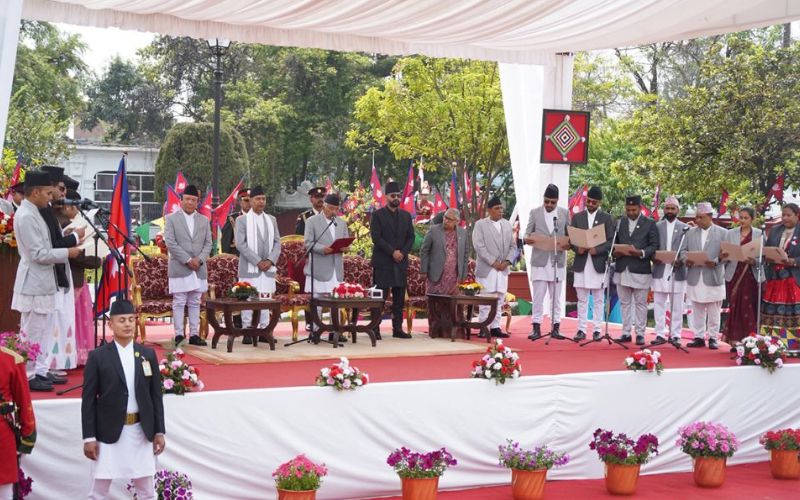
Balen Shah has officially taken the oath of office and secrecy, marking the formation of a new government in Nepal. The oath was administered by President Ram Chandra Poudel at a special ceremony held at Shital Niwas. The event was attended by Vice President Ram Sahaya Prasad Yadav, Chief Justice Prakash Man Singh Raut, and other senior political leaders and dignitaries. The ceremony followed Vedic traditions, with the Nepal Army presenting a ceremonial salute.The newly formed cabinet includes key appointments, with Dr. Swarnim Wagle taking charge as Finance Minister. Other ministers include Sudan Gurung as Home Minister, Shishir Khanal as Foreign Minister, Sunil Lamsal as Minister for Physical Infrastructure and Transport, and Biraj Bhakta Shrestha as Minister for Energy, Water Resources, and Irrigation. Prime Minister Shah himself has retained the portfolios of Defense and Industry, Commerce, and Supplies.Immediate Economic PressuresThe new government faces urgent economic challenges, with the national budget due by mid-June. Rising global tensions, particularly conflicts in the Middle East, have already triggered increases in petroleum prices, which are expected to drive inflation in Nepal. Higher energy costs are likely to affect transportation, production, and everyday consumer goods.Remittance and Labor RisksApproximately 1.7 million Nepali workers in the Middle East face potential risks due to ongoing conflict in the region. Any prolonged instability could disrupt remittance inflows, which contribute around 25–30% of Nepal’s GDP. A sudden decline in remittance—estimated at over NPR 200 billion monthly—could significantly impact the country’s economic stability.Weak Investment EnvironmentDespite excess liquidity in banks and financial institutions, Nepal’s investment climate remains sluggish. While political stability has raised expectations for economic recovery, translating those expectations into real economic activity remains a major challenge.Challenges in Delivering Party CommitmentsRastriya Swatantra Party has outlined ambitious commitments in its manifesto, including returning cooperative victims’ savings within 100 days and creating a business-friendly economic environment. However, given the scale of financial irregularities in the cooperative sector and limited state resources, fulfilling these promises may prove difficult.The government has proposed a revolving fund of NPR 2 billion to refund small depositors up to NPR 100,000. While this offers short-term relief, experts believe a comprehensive structural solution is still needed.Policy Reforms and Economic VisionThe government has pledged to eliminate outdated laws, establish a one-stop service center for investors, and bring non-banking financial institutions under stricter central bank supervision. Plans also include promoting innovation and entrepreneurship, attracting foreign investment, facilitating dollar accounts, and establishing a “National Knowledge Bank.”The new administration begins its tenure with high public expectations. While political stability offers hope for economic reform and growth, external pressures, structural weaknesses, and ambitious policy commitments present significant challenges ahead.