Excess Liquidity Becomes Growing Challenge for Nepal’s Central Bank
Author
NEPSE TRADING
The rising level of excess liquidity in Nepal’s banking system has emerged as a major challenge for monetary authorities in recent months. Weak credit demand, slowing economic activities, and limited lending opportunities in productive sectors have led to a large volume of idle funds piling up in banks and financial institutions.
As businesses remain cautious and investment activities slow down, banks have struggled to channel their surplus funds into loans. This has resulted in a widening gap between deposits and credit, increasing pressure on the financial system. Economists warn that prolonged excess liquidity could weaken the effectiveness of monetary policy and limit economic recovery.
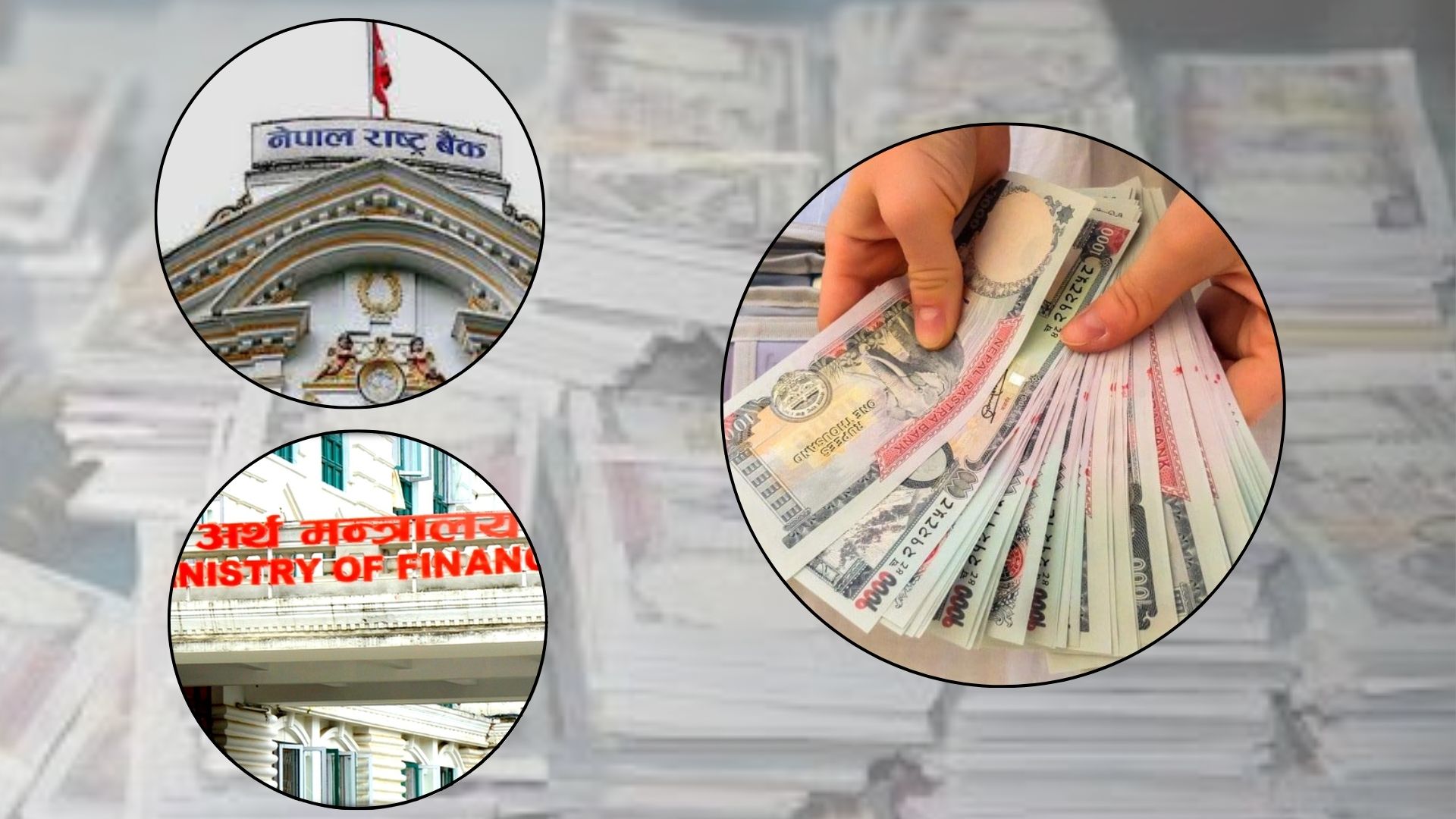
With liquidity rising sharply, the interbank interest rate has fallen to as low as 2.75 percent. To prevent rates from falling below the lower limit of the interest rate corridor, the Nepal Rastra Bank has been continuously withdrawing money from the market. As part of this effort, the central bank has announced plans to absorb NPR 50 billion for 42 days through a deposit auction.
According to the central bank, the auction will be conducted through an online bidding system. Banks and financial institutions will be allowed to submit bids between 2 PM and 3 PM. The interest rate will be determined through competitive bidding, while both principal and interest will be paid on Chaitra 8, 2082.
To participate in the deposit collection process, institutions must bid a minimum of NPR 100 million. Bids can be submitted up to the total announced amount in multiples of NPR 50 million. The central bank has also allowed multiple bids at different interest rates, providing flexibility to participating institutions.
In the allocation process, priority will be given to institutions offering the lowest interest rates. Bids with higher rates will be accepted gradually until the total target amount is met. Only ‘A’, ‘B’, and ‘C’ class banks and financial institutions licensed by the central bank are eligible to participate in this process.
Over NPR 850 Billion Parked at the Central Bank
Due to persistent excess liquidity, more than NPR 850 billion has now been parked at the central bank. Nepal Rastra Bank has been absorbing surplus funds through deposit auctions, standing deposit facilities, and central bank bonds as part of its liquidity management strategy.
Recent data shows that NPR 861.25 billion of banks’ liquidity is currently held at the central bank. Of this, NPR 474.55 billion is placed through deposit auctions, NPR 186.70 billion through standing deposit facilities, and NPR 200 billion through central bank bonds.
This growing accumulation of funds at the central bank reflects the limited lending opportunities in the market. Despite having abundant resources, banks are unable to expand credit at the desired pace, indicating structural weaknesses in economic activity.
Weak Credit Demand and Economic Slowdown
At present, total deposits in the banking system stand at around NPR 7,700 billion. However, credit expansion has remained sluggish due to weak demand from the private sector. Slow growth in industries, trade, and construction has reduced the need for bank financing.
Experts say the long-term nature of excess liquidity poses risks to financial stability. If banks fail to deploy their funds effectively, profitability may decline, and the flow of credit to productive sectors could remain constrained.
Moreover, low interest rates caused by surplus liquidity may discourage savings and distort market signals. This could further complicate monetary management in the coming months.
Central Bank’s Efforts Through Open Market Operations
To manage liquidity and stabilize interest rates, Nepal Rastra Bank has been actively using open market instruments such as deposit collection tools, standing deposit facilities, and central bank bonds. Through these mechanisms, the central bank aims to regulate money supply and maintain balance in the financial system.
However, economists argue that technical measures alone may not be sufficient. Sustainable liquidity management requires stronger economic activities, increased private investment, and improved business confidence.
They stress that boosting credit demand, encouraging industrial expansion, and accelerating infrastructure projects are essential to absorb excess funds into the real economy.
Outlook
The current situation indicates that while Nepal’s banking system is financially liquid, it is facing difficulties in utilizing resources effectively. The growing dependence on central bank instruments for parking surplus funds highlights underlying weaknesses in economic momentum.
Unless economic activities revive and credit demand improves, excess liquidity is likely to remain a persistent challenge. For now, managing surplus funds has become one of the central bank’s most pressing tasks, reflecting the broader slowdown in the country’s financial and economic landscape.