Inflation at Historic Low in First Four Months, Decline in Food Prices Brings Consumer Relief
Author
NEPSE TRADING
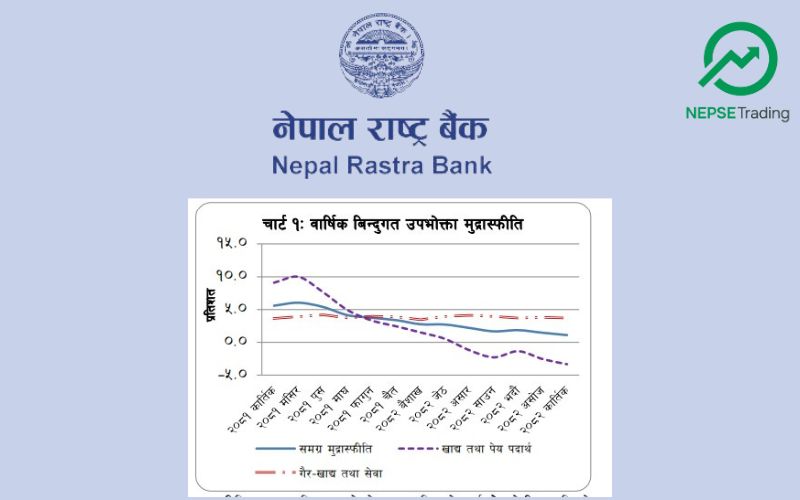
The inflation outlook of Nepal has improved significantly in the first four months of fiscal year 2082/83 (up to mid-November 2025), indicating strong price stability across the economy. According to data published by Nepal Rastra Bank, year-on-year consumer inflation stood at just 1.11 percent in mid-November 2025, a sharp decline from 5.60 percent in the same month last year.
Food Inflation Turns Negative
During the review month, food and beverage inflation declined by 3.32 percent, reflecting a notable fall in prices of key food items. In contrast, food inflation in the same period last year was 9.10 percent.
Meanwhile, non-food and services inflation stood at 3.69 percent, almost unchanged compared to 3.65 percent recorded a year earlier.
Average Inflation Remains Low
The average consumer inflation for the first four months of FY 2082/83 was limited to 1.53 percent, significantly lower than 4.59 percent in the corresponding period of the previous fiscal year. This points to an overall easing of price pressures in the economy.
Mixed Trends in Food Sub-Groups
Within the food and beverage category, prices of ghee and oil (up 5.25 percent), non-alcoholic beverages (3.61 percent), and milk and eggs (1.97 percent) increased.
However, prices of vegetables fell sharply by 14.43 percent, while spices declined by 7.85 percent and pulses and legumes by 5.36 percent, pulling overall food inflation into negative territory.
Non-Food and Services See Moderate Price Increases
In the non-food and services group, prices rose notably for miscellaneous goods and services (15.17 percent), education (7.56 percent), clothing and footwear (6.29 percent), tobacco products (4.84 percent), and furnishing and household equipment (4.55 percent).
By contrast, prices in insurance and financial services declined by 0.23 percent.
Urban–Rural and Provincial Inflation
Inflation in rural areas increased by 0.66 percent, while urban inflation stood at 1.26 percent during the review month.
Provincially, inflation was highest in Koshi Province (1.80 percent) and Madhesh Province (1.73 percent), whereas it remained lowest in Sudurpashchim Province (0.26 percent) and Gandaki Province (0.37 percent).
Inflation in the Kathmandu Valley was recorded at 1.16 percent.
Wholesale Inflation Also Under Control
In mid-November 2025, year-on-year wholesale inflation stood at 2.65 percent, down from 5.16 percent a year earlier. Wholesale inflation for consumer goods was 1.91 percent, intermediate goods 3.14 percent, and capital goods 2.26 percent.
The wholesale price index of construction materials increased by 3.24 percent.
Nepal–India Inflation Comparison
Nepal’s year-on-year consumer inflation was 1.11 percent in mid-November 2025, while India recorded consumer inflation of 0.71 percent in November 2025.
The sharp decline in food prices and balanced demand–supply conditions have pushed inflation to a historically low level, providing immediate relief to consumers. However, moderate price increases in non-food and service sectors suggest the need for continued policy vigilance to maintain long-term price stability.