Nepal Warehousing Company Sees Sharp Revenue Decline, Losses Narrow in Second Quarter
Author
NEPSE TRADING
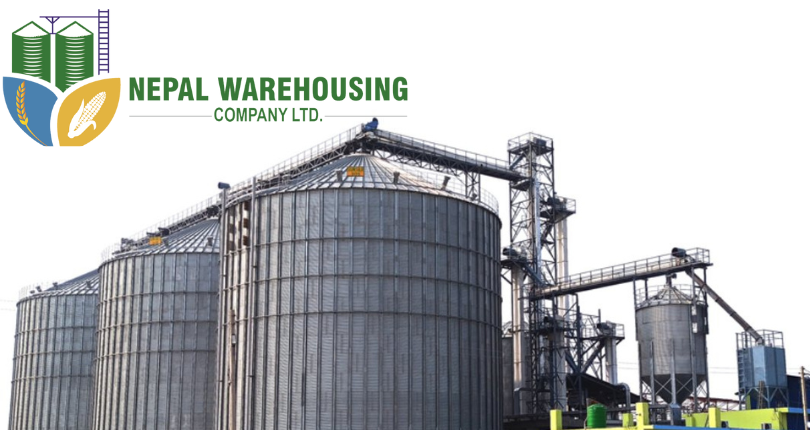
Nepal Warehousing Company Limited has published its unaudited financial statement for the second quarter of the current fiscal year, revealing a sharp decline in operating income. The report shows that the company’s business activities have slowed significantly compared to the previous year, raising concerns about its revenue sustainability.
During the first six months of the last fiscal year, the company had earned NPR 315 million in operating income. However, in the same period of the current fiscal year, its income dropped drastically to just NPR 42.4 million. This steep fall reflects weakening operational performance and reduced utilization of storage facilities.
According to the company, the decline in revenue is mainly due to rising payment demands for grains stored in silos, which has reduced stock levels. In addition, the warehouse receipt system has not been implemented effectively and on time, limiting the company’s ability to generate expected income. As a result, key revenue sources have remained under pressure.
Despite the sharp fall in income, the company has managed to reduce its overall losses. In the second quarter of the previous fiscal year, Nepal Warehousing Company had recorded a loss of NPR 57.4 million. This year, the loss has narrowed to NPR 20.9 million during the same period.
The company attributes this improvement to strict cost-control measures. By reducing administrative, operational, and other overhead expenses, management has been able to limit financial damage despite weak earnings. Analysts view this as a positive step toward improving financial discipline.
As of mid-Poush, the company’s annual earnings per share (EPS) stood at negative NPR 6.09, indicating that it is still operating at a loss. Meanwhile, its net worth per share was recorded at NPR 101.24, suggesting that the company retains some underlying asset strength despite ongoing challenges.
The company’s paid-up capital currently stands at NPR 687.5 million. However, its other equity has turned negative at NPR 202.5 million, reflecting accumulated losses over the years. This negative equity position highlights continued financial pressure and the need for structural reforms.
Financial experts say the effective implementation of the warehouse receipt system could play a key role in improving the company’s performance. If properly enforced, the system could strengthen links between farmers, traders, and financial institutions, helping to boost storage demand and revenue generation.
In addition, expanding storage capacity, diversifying services, and increasing cooperation with the private sector could help improve long-term sustainability. Improving logistics efficiency and adopting digital systems are also seen as important steps for modernization.
Overall, the latest financial results indicate that Nepal Warehousing Company is facing serious revenue challenges but is making progress in controlling losses. While cost management has provided short-term relief, analysts stress that long-term recovery will depend on policy support, operational reforms, and effective implementation of market-oriented systems.
Market observers believe that with timely reforms and improved governance, the company still has the potential to regain stability and strengthen its role in Nepal’s agricultural supply chain in the coming years.