·
NEPSE Slides Sharply as Key Support Breaks, Confidence Crisis Deepens
Author
NEPSE TRADING
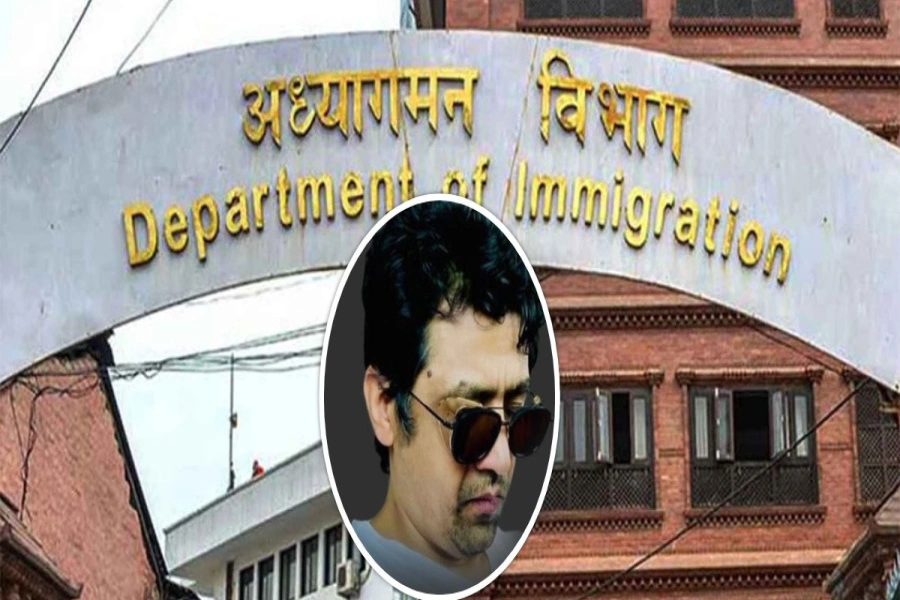
Kathmandu. Nepal’s stock market witnessed a sharp downturn on Wednesday, with the NEPSE index falling by 74.73 points to close at 2,776.36, intensifying investor anxiety. The brief recovery seen in the previous session failed to sustain, clearly indicating underlying weakness in the market. What initially appeared as a short-term rebound has now turned into renewed downward momentum, pushing the market into a more fragile phase.The decline was broad-based, with all 13 sectoral indices ending in negative territory. The “Others” sub-index recorded the steepest drop of over 5 percent, while development banks, finance, and trading sectors fell by more than 3 percent. Banking, hydropower, insurance, hotels, and investment sectors also declined by over 2 percent each, reflecting that the weakness is not limited to specific segments but is spread across the entire market structure.Market analysts attribute the fall primarily to the ongoing investigation surrounding Dipak Bhatt, which has significantly impacted investor sentiment. Concerns over large financial transactions, possible irregularities, and the suspected involvement of black money have created a wave of fear in the market. What began as an isolated case has now evolved into a broader concern, shaking confidence across all categories of investors.From the opening bell, selling pressure dominated the session. The index began declining early and failed to show any meaningful recovery throughout the trading day. This behavior indicates a strong lack of confidence among investors, who appear more inclined to exit positions rather than wait for stabilization. The breakdown of the critical support level around 2,788 has further reinforced bearish sentiment.Technically, the market has entered a vulnerable phase. The breakdown of a historically strong support zone suggests that the previous price floor has now turned into a resistance level. Additionally, the upward trendline that had been supporting the formation of higher lows has been breached, signaling a potential trend reversal. The market, which was previously in a gradual upward structure, now appears to be shifting toward a downward trajectory.Despite the sharp fall, trading turnover remained relatively strong, exceeding Rs 12 billion. This indicates that market activity has not diminished, but the nature of activity has shifted toward aggressive selling. High volume during a declining market is typically associated with a distribution phase, where large investors gradually exit positions, often leaving retail investors exposed.The insurance sector faced significant pressure, particularly Nepal Reinsurance Company Limited, whose share price dropped by nearly 10 percent. This sharp decline highlights weakening investor confidence in the sector. Meanwhile, Himalayan Reinsurance Limited recorded the highest turnover, suggesting heightened activity driven by both panic selling and speculative trading.The candlestick formed on the daily chart is a classic bearish breakdown candle, characterized by a strong downward move, violation of support, and a close near the day’s low. Such a formation indicates strong seller dominance and often signals continued downward pressure in the near term. Combined with the formation of lower highs, the chart suggests that the market may be entering a confirmed downtrend.Looking ahead, immediate support levels are seen around 2,600, followed by 2,568 and 2,530. If the current selling pressure continues, the index may gradually test these lower levels. On the upside, resistance now lies near the 2,900 range, but given the current momentum, a swift recovery appears unlikely.Overall, the market is currently experiencing a deep crisis of confidence. Regulatory developments, technical breakdowns, and psychological pressure have converged to push the market lower. For investors, this remains a high-risk environment where caution is essential. A sustainable recovery will likely require clearer policy direction, improved transparency, and the return of institutional participation. Until then, volatility is expected to remain elevated.