Upper Tamakoshi in Crisis as AGM Delays Raise Delisting Risk
Author
NEPSE TRADING
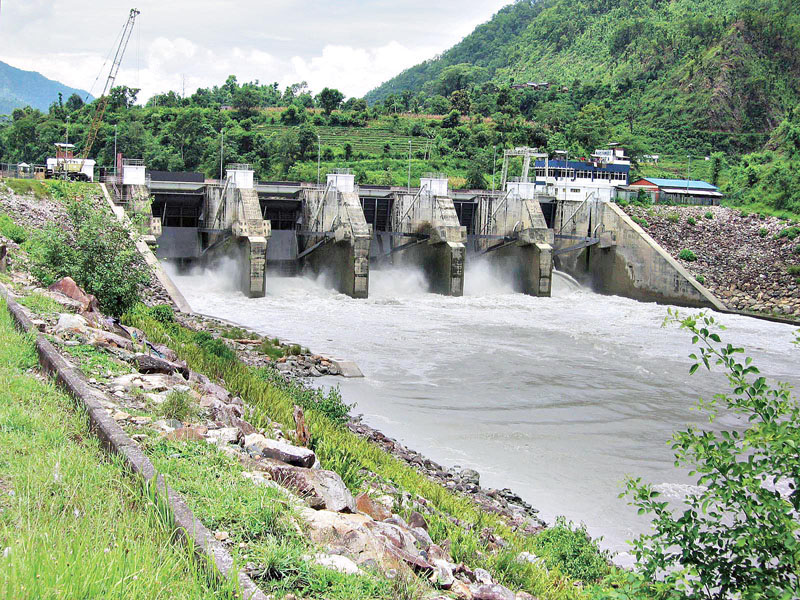
Kathmandu — Upper Tamakoshi Hydropower Limited is facing mounting pressure after failing to convene its regular Annual General Meeting (AGM) on time, triggering serious concerns over corporate governance, transparency, and investor protection. With no AGM held for three consecutive years, the company appears to be in breach of regulatory standards, raising fears that prolonged non-compliance could ultimately lead to delisting from the stock exchange. The situation has left public investors increasingly anxious and uncertain.
The Upper Tamakoshi Hydropower Project, long regarded as a national pride project, has recently come under scrutiny for what investors describe as deep-rooted governance failures. Since holding its AGM for fiscal year 2079/80 (2022/23) in Shrawan 2080, the company has not managed to organize another regular shareholders’ meeting. As a result, investors say they remain uninformed about the company’s true financial condition and have received no indication of dividend distribution.
The absence of regular AGMs has also meant that independent directors have yet to be appointed. Investors allege that the board is dominated by the Nepal Electricity Authority, with no effective checks and balances in place. In the absence of independent oversight, decision-making is said to have become opaque, undermining the basic principles of governance expected of a publicly listed company. Shareholders have begun voicing their frustration publicly, stating that despite being owners, they are kept in the dark about key corporate developments.
Concerns have also been raised over the company’s leadership structure. Under the current arrangement, the Managing Director of the Nepal Electricity Authority also serves as the chairperson of Upper Tamakoshi. Investors argue that when one individual leads as many as 18 to 20 different institutions, it becomes impossible to devote adequate time and attention to Upper Tamakoshi. They further claim that board meetings often lack meaningful discussion, with decisions taken unilaterally and meetings sometimes left incomplete, weakening institutional governance.
Although Upper Tamakoshi is a public limited company, investors allege that key positions are occupied by officials from the Authority. According to shareholders, these officials prioritize pleasing their parent institution over safeguarding the interests of the company and its public investors. The practice of placing external officials in senior roles within a public company has been described as legally questionable and contrary to the spirit of corporate accountability.
The company’s troubles have been compounded by a downgrade from credit rating agency ICRA Nepal, which recently lowered Upper Tamakoshi’s rating to the ‘D’ category. The downgrade followed reports that the company delayed debt servicing by more than 30 days. Previously rated ‘Double B’, the fall to the lowest category has intensified fears that, if regulators such as the Nepal Securities Board and the Nepal Stock Exchange remain passive, the company could face delisting from the secondary market.
Investors argue that while the project was completed under successive leaderships—from Kulman Ghising to Hitendra Dev Shakya—weak management has now placed billions of rupees of public investment at risk. They further allege that the Power Purchase Agreement (PPA) rate was fixed primarily to benefit the Authority, leaving the project struggling to service its debt even at higher levels of electricity generation.
Upper Tamakoshi’s long-term debt has reached NPR 45.36 billion. Loans taken from the Government of Nepal are scheduled to be repaid over 15 years in 30 installments, while loans from other institutional lenders are to be repaid over the same period in 60 installments. According to the company, by mid-Ashoj of fiscal year 2082/83, seven installments of principal and interest to the government and 14 installments to other lenders had already been repaid.
Although the project is now fully operational, delays during construction and cost overruns have significantly increased interest expenses, depreciation, and operating costs. Reducing these expenses, ensuring stable and predictable revenue from electricity sales, strengthening the company’s financial position, and delivering dividends to shareholders remain the company’s most pressing challenges.
Despite these concerns, the company reported an improvement in profitability in the first quarter of the current fiscal year (up to mid-Ashoj). Upper Tamakoshi posted a net profit of NPR 1.66 billion during the period, compared to NPR 631.9 million in the same quarter last year. Electricity sales revenue stood at NPR 3.85 billion, while financial expenses totaled NPR 1.04 billion.
With a paid-up capital of NPR 21.18 billion, the company’s retained earnings remain negative at NPR 10.77 billion. Earnings per share stand at NPR 7.91, while net worth per share is NPR 53.25. Of the 211.8 million shares listed on the stock exchange, 51 percent are held by promoters and 49 percent by the general public. On Magh 4, the company’s share price closed at NPR 174.90.
Upper Tamakoshi has a high level of ownership by government and public institutions. Approximately 51 percent of its paid-up capital is held by the Nepal Electricity Authority, Nepal Telecom, Citizen Investment Trust, and Rastriya Beema Sansthan. The remaining shares are owned by the general public, residents of Dolakha district, employees, provident funds, and other institutional groups. In the absence of timely regulatory intervention, investors warn that the ongoing governance crisis could undermine not only the company but also public confidence in Nepal’s hydropower sector as a whole.