Reservoir-Based Hydropower Project Planned in Dolpa, Environmental Review Underway
Author
NEPSE TRADING
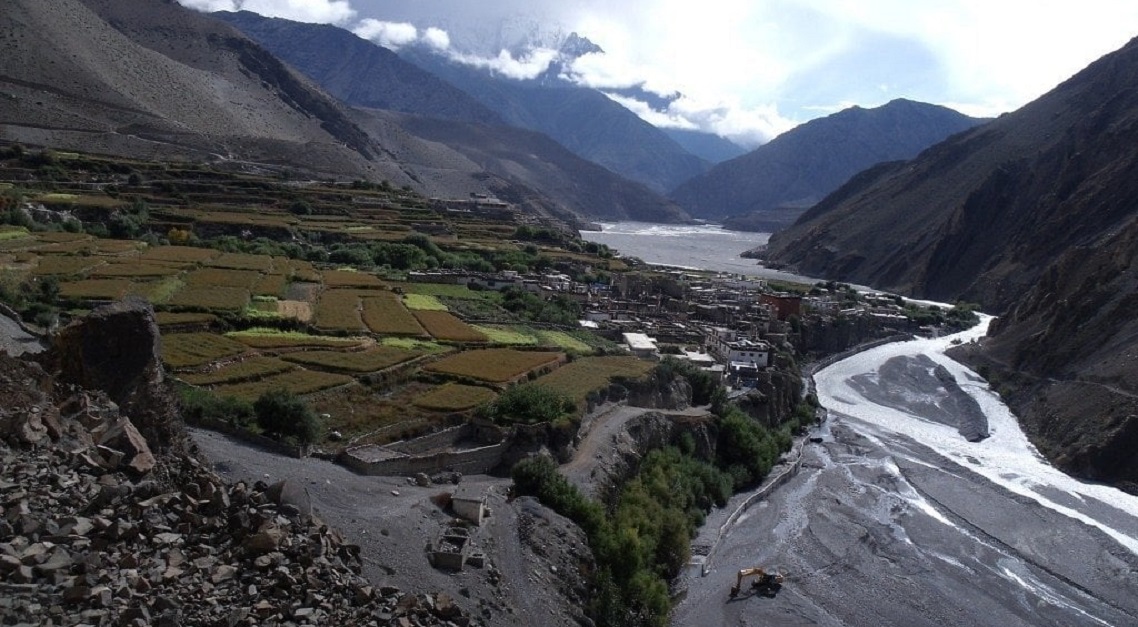
A large reservoir-based hydropower project is set to be developed in Dolpa district, a region long considered lagging behind in infrastructure and economic development. The proposed 328-megawatt Bhargung Hydropower Project is moving forward, with the government initiating detailed studies and the environmental impact assessment (EIA) process.
According to the Department of Electricity Development, preparatory studies have been completed and the EIA report has been submitted to the Ministry of Forests and Environment for approval, following a recommendation from the Ministry of Energy, Water Resources and Irrigation.
The project will be constructed across Chharka Tangsong Rural Municipality and Kaike Rural Municipality in Dolpa, utilizing water from the Bhargung River and Tatu Khola. Of the total capacity, 325 megawatts will be generated through a reservoir-based system on the Bhargung River, while an additional 3.10 megawatts will be produced using two run-of-river systems drawing 1.12 cubic meters per second of water from Tatu Khola.
Project documents show that areas in Chharka Tangsong–4 and 5 and Kaike–1 will be affected. Key infrastructure includes a 169-meter-high dam, a 766-meter diversion tunnel, intake structures, and a 16-kilometer headrace tunnel in Chharka Tangsong–4. An underground powerhouse and tailrace canal will be built spanning Chharka Tangsong–4 and Kaike–1. Parts of Chharka Tangsong–5 will be submerged due to the reservoir.
The combined systems are expected to generate approximately 933.19 gigawatt-hours of electricity annually. The project site lies about 12 kilometers from Jufal Airport, and the generated power will be connected to the national grid through the proposed Dunai substation.
The total estimated cost of the Bhargung project stands at Rs 103.31 billion, translating to a per-megawatt cost of around Rs 285 million. Officials say the project could significantly enhance power generation in Karnali Province and help balance seasonal electricity supply through reservoir-based storage.
32 MW Karuwa Seti Project Advances in Kaski
Meanwhile, another hydropower project is progressing in Kaski district. A 32-megawatt Karuwa Seti Hydropower Project is planned in Machhapuchhre Rural Municipality, promoted by Bhyamolong Hydropower Development Company Limited.
The Ministry of Forests and Environment has requested public suggestions and expert input for a supplementary environmental impact assessment, citing design modifications to the project. These include a shortened headrace tunnel, an extended penstock pipeline, and relocation of the powerhouse, all of which necessitate a revised environmental review.
The Karuwa Seti project falls within the Annapurna Conservation Area, making environmental scrutiny particularly sensitive. Earlier approvals allowed the use of 9.65 hectares of forest land and 0.95 hectares of private land under a revised environmental management plan. However, additional land requirements have emerged, prompting the ministry to seek further consultation.
Broader Significance
With both projects moving ahead, policymakers see growing momentum in expanding hydropower generation beyond traditional hubs into remote and environmentally sensitive regions. While the projects promise substantial gains in energy security and regional development, authorities emphasize that environmental safeguards and local impacts will play a decisive role in determining final approvals.
If implemented as planned, the Bhargung and Karuwa Seti projects could mark a significant step toward diversifying Nepal’s hydropower portfolio and strengthening its long-term sustainable energy strategy.